
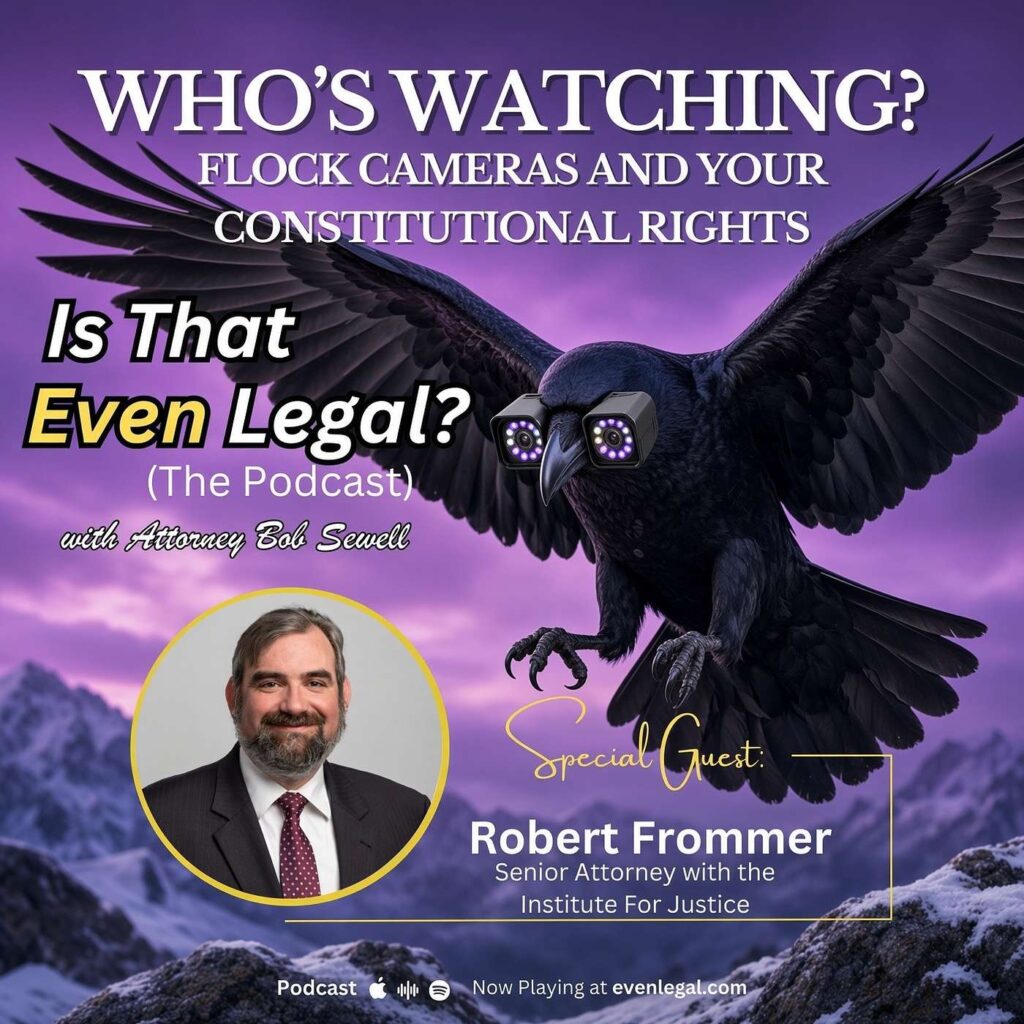
Your license plate is not just a number, it is a key that can unlock a timeline of where you have been. We sit down with Robert Fromer, a senior attorney at the Institute for Justice, to unpack how automatic license plate readers (ALPRs) including Flock Safety camera networks collect vehicle data at scale, store it in searchable databases, and create opportunities for both error and abuse. From stalking scandals to misreads that end with innocent drivers pulled over at gunpoint, we focus on the real world costs that rarely show up in glossy “public safety” sales pitches.
We also get practical about the Fourth Amendment. We connect modern surveillance to Kyllo v United States and to the Supreme Court’s recent geofence warrant ruling (Chatry), which wrestles with the dangers of pervasive, retrospective location tracking. The core question is simple: when government can cheaply map long term routines and sensitive visits, should that power be treated as a search that requires meaningful judicial oversight?
Finally, we shift from theory to action. If your city is considering ALPR deployment, we walk through what to ask at public meetings: camera placement, data retention, who can query the system, what approvals are required, whether audits actually happen, and how funding can bypass democratic accountability. We also look ahead to facial recognition and even national security risks when surveillance credentials or data leak.
Subscribe for more clear legal conversations, share this with a friend who cares about privacy, and leave a review to help others find the show. Where do you think the warrant line should be drawn?